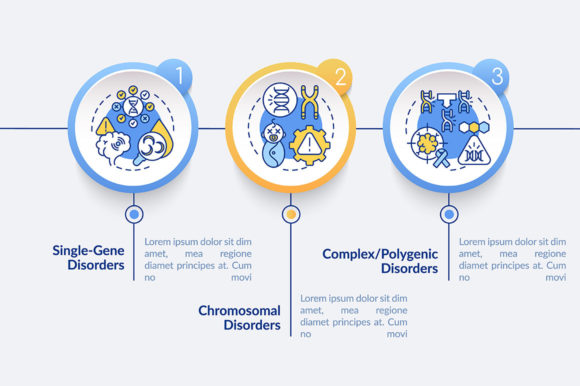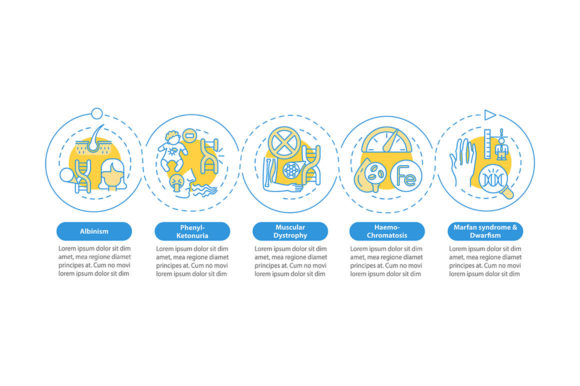
Different Genetic Disorders Vector Graphics
First Impressions: A Visual Language for Healthcare Communication
Opening the Different Genetic Disorders Vector graphic template immediately sets a professional tone. The design feels clean, structured, and well-suited for healthcare or educational contexts. It's clear this asset was created with purpose — not just for decoration, but for delivering complex information in an accessible way.
The use of a five-step data visualization process timeline chart gives it a logical flow that’s easy to follow. This makes it ideal for presentations, infographics, or even educational material where clarity is key. The linear icons add a subtle touch of modernity without overwhelming the viewer. The color palette is muted and professional, making it feel trustworthy and appropriate for healthcare or scientific communication.
Design Asset Versatility: Where This Template Fits Best
As a designer working on branding for a small business or a handmade product line, I look for assets that can adapt to various mediums. The Different Genetic Disorders Vector infographic template is no exception. It works exceptionally well in large layout areas like hero graphics, product mockups, and editorial spreads. Its structure allows for easy integration into brand identity elements such as packaging design, website banners, or social media posts.
For example, if a client is launching a health-related product line, this vector could be used in marketing visuals to explain the benefits of their offering in a visually engaging way. It’s also suitable for digital ads, Pinterest pins, or Instagram posts that need to convey a message quickly while maintaining visual interest.
Its workflow layout and step-by-step format make it perfect for supporting brand elements like blog visuals, informational posters, or even printable wall art in a medical office or educational setting.
Where Caution Is Needed: Practical Design Considerations
While the Different Genetic Disorders Vector is versatile, it's important to consider where it may not perform as well. In projects that require very clean visual hierarchy or minimalist branding, this design might appear too structured or busy. It’s best avoided in small sizes or crowded layouts where its details could get lost.
Additionally, when using this graphic in professional corporate materials or projects that demand a very refined aesthetic, it may not align with the desired tone. However, for creative marketplaces, Etsy products, or print-on-demand sellers, it offers a unique angle that stands out from generic clipart or stock illustrations.
Readability and Brand Consistency: Key Factors for Client Projects
One of the most important aspects of any design asset is how it affects readability and visual hierarchy. The Different Genetic Disorders Vector infographic template uses clear lines and structured elements to guide the viewer through the content. This makes it highly effective for educational or informative purposes, ensuring the audience can absorb the information without confusion.
When integrating this graphic into a brand’s visual identity, it’s essential to ensure consistency. The style should match the overall brand tone — whether that’s modern, traditional, or somewhere in between. For instance, pairing it with a sans-serif font would maintain a clean and professional look, while a script font might clash with its structured nature.
This asset also contributes to visual trust and recognition. When used consistently across different platforms, it reinforces brand messaging and helps create a cohesive image that resonates with the target audience.
Practical Designer Notes: Before Using for Commercial Projects
Before committing to using the Different Genetic Disorders Vector in a real client project, there are several practical steps a designer should take:
- Test it in black and white: Assess how the design performs without color. Does it still communicate the intended message?
- Check contrast on light and dark backgrounds: Ensure the graphic remains legible and doesn’t blend into the background.
- Preview at small and large sizes: Confirm that the details remain intact when scaled down for social media or up for print.
- Place it on real mockups: See how it integrates with actual products or packaging designs.
- Review file formats: Confirm that SVG or PNG files are included and suitable for the intended use (e.g., sublimation design, Cricut project, or web graphics).
- Confirm commercial licensing: Always verify that the asset comes with a commercial license before using it for a client or business project.
These considerations ensure that the final result is polished, professional, and aligned with both the client’s vision and the end user’s needs.
A Creative Asset Worth Exploring
The Different Genetic Disorders Vector infographic template is a valuable addition to any designer’s toolkit. Whether you're creating marketing visuals for a handmade business, developing a product line, or designing for a small business launch, this graphic asset brings clarity, professionalism, and a touch of modern design to your work.
It’s especially useful for those working in healthcare, education, or any niche that requires data visualization. With proper testing and thoughtful application, it can elevate the visual impact of a project and contribute to a more engaging and memorable experience for the audience.